The functionality of smart communication applications is no longer limited to sending messages. Modern versions of WhatsApp often include additional features to improve the user experience with voice messages, calls, and media. One of the most useful new features of Blue WhatsApp is its advanced proximity sensor and audio routing capabilities, and users looking to try these improvements can easily find the Blue WhatsApp update download online to experience the latest enhancements seamlessly.
Many users focus on themes, privacy options, and customization tools, but audio management is also crucial for everyday use. Blue WhatsApp introduces additional control options that make voice messages and calls smarter, depending on how your device is used.
This article will explain how proximity sensors work, how audio routing improves communication, and how these features make voice interaction more convenient.
What Is a Proximity Sensor
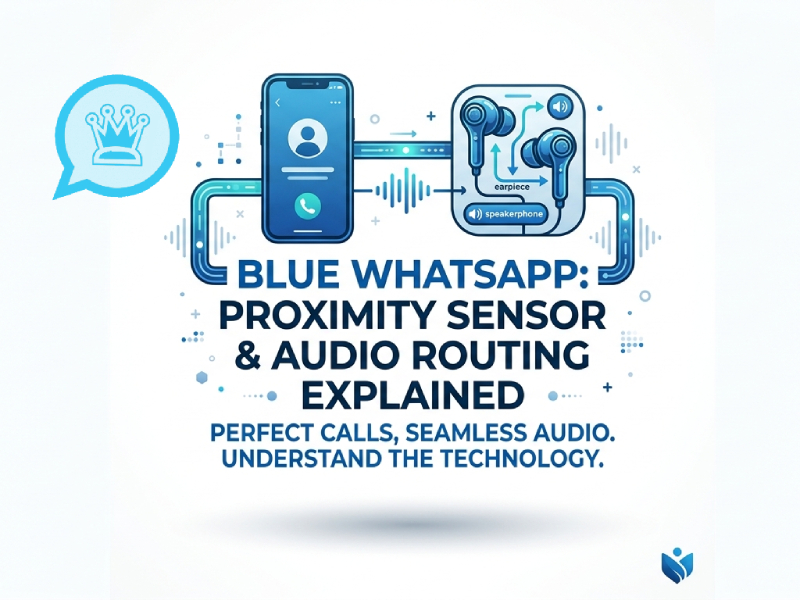
A proximity sensor is a small hardware component built into most modern smartphones. Its main function is to detect when an object gets close to the phone screen. By measuring the distance between the sensor and nearby objects, it can automatically trigger specific actions within the device. This technology is widely used in messaging applications and modified versions of WhatsApp to improve call handling and screen behavior. Many users exploring the Best WhatsApp mod 2026 are also interested in advanced proximity sensor features, as they can help prevent accidental touches and create a smoother experience during voice calls and voice note playback.
The most common use of proximity sensors is during phone calls. When you bring your phone close to your ear, the sensor detects that your face is close. This usually causes the screen to automatically turn off, preventing accidental touches from ending the call, muting the microphone, or opening other apps. It can also save power by turning off the screen when it is not needed.
Blue WhatsApp takes this basic hardware functionality a step further. The application not only uses sensors during calls, but also integrates them into voice message playback and other audio interactions. This means the phone can detect when you bring it close to your ear to listen to voice messages and automatically switch the audio from the speaker to the earpiece.
Understanding Audio Routing
Audio routing refers to the process of selecting the location where sound will play. In smartphones, audio is not sent to a single speaker by default, but can be distributed to multiple output channels based on device settings and application logic. This ensures you hear notifications, calls, or media content in the most appropriate context.
A smartphone may have several audio output options:
- Main speaker: Ideal for hands-free listening or sharing audio with others nearby.
- Earpiece speaker: Usually used for phone calls or private listening.
- Wired headset: Useful when you plug in headphones for personal audio without disturbing others.
- Bluetooth earbuds: Provide wireless listening and often support extra features like call controls.
- Bluetooth speakers: Good for groups or when higher volume is needed.
- Car audio systems: Allow music and calls to play through a vehicle’s sound system.
In standard instant messaging applications, audio routing is usually automatic but has limited functionality. Unless manually switched, voice messages may always be played through the main speaker. Blue WhatsApp improves this by automatically selecting the most appropriate output method by combining device sensors, connection status, and user behavior, without requiring manual intervention.
How Blue WhatsApp Uses Advanced Audio Routing
Blue WhatsApp attempts to direct audio to the most appropriate output based on device status and user actions.
For example:
| Situation | Audio Output |
| Phone held normally | Loudspeaker |
| Phone near ear | Earpiece |
| Bluetooth earbuds connected | Bluetooth audio |
| Wired headset connected | Headset |
| Voice call active | Call the audio channel |
This dynamic switching reduces the need for manual adjustments.
Users can move between different listening scenarios without constantly changing settings.
Benefits of Listening to Voice Messages
Voice messaging is one of the most commonly used communication methods.
The proximity sensor feature enhances the user experience in several ways.
Better Privacy
When a voice message is played through a speaker, people nearby may hear parts of it.
Simply hold your phone to your ear, and Blue WhatsApp will switch the audio to the earpiece, enhancing the privacy of your conversations.
Natural Listening Experience
The process feels just like answering a phone call.
Users don’t need to search for volume control buttons or switch playback devices; they can simply bring their phones close.
Fewer Accidental Touches
When the screen turns off during ear playback, accidental taps become less likely.
This prevents actions such as:
- Pausing playback
- Opening other chats
- Sending unintended reactions
- Activating unwanted buttons
Improvements During Voice Calls
Voice communication is not limited to recorded messages.
Audio routing can also improve call handling.
Seamless Device Switching
Imagine you start a call using your phone’s speakerphone, then connect a Bluetooth headset.
Advanced routing systems can transmit audio to newly connected devices without interrupting the call.
Consistent Audio Output
The system attempts to maintain the most logical output destination based on available hardware.
This helps avoid situations where audio unexpectedly plays through the wrong speaker.
Reduced Manual Adjustments
Users spend less time navigating audio menus and more time focusing on the conversation itself.
Comparing Standard WhatsApp and Blue WhatsApp Audio Handling
The exact behavior may vary by device and Android version, but Blue WhatsApp generally offers additional flexibility.
| Feature | Standard WhatsApp | Blue WhatsApp |
| Basic proximity sensor support | Yes | Yes |
| Automatic ear playback | Yes | Enhanced |
| Additional audio controls | Limited | More options |
| Device routing flexibility | Standard | Extended |
| Custom user preferences | Limited | More configurable |
| Advanced listening experience | Basic | Improved |
These differences are particularly noticeable for users who frequently exchange voice messages.
How the Sensor Detects Ear Placement
The proximity sensor is usually located at the top front of the smartphone, near the earpiece. Its main function is to detect whether an object is very close to the device. When you bring your phone close to your face while listening to a voice message, the sensors can quickly detect changes in distance.
In Blue WhatsApp, this message is used to create a more natural listening experience. Once the sensor detects that the phone is close to your ear, the app can switch audio playback from the speaker to the earpiece. At the same time, the screen may be temporarily turned off to prevent accidental touches to your cheek or hands.
The entire process is completed automatically, usually in less than a second. Users do not need to press any buttons or manually change the audio settings. Once the phone is away from the ear, the sensors detect that the nearby object has disappeared and resume normal playback behavior, including reactivating the screen and switching the audio back to the speaker if necessary.
This real-time detection system makes the voice messaging experience closer to that of a traditional telephone call. This app requires no manual adjustment; the sensors work continuously in the background to help Blue WhatsApp respond instantly to how the user holds the device, thereby enhancing the listening experience. This automatic switching feature is especially useful when users frequently switch between private listening and speaker playback modes throughout the day.
Why Frequent Voice Note Users Appreciate This Feature
Texting is not always the fastest or clearest way to communicate. Many users rely heavily on voicemail because it enables faster communication, richer emotional expression, and easier explanation of complex topics. Typing long messages can be tiring, especially when you need to convey tone, urgency, or subtle emotions, while voicemail can do the job with ease. For people who frequently send voice notes, learning how to use Blue WhatsApp proximity sensor can further improve the experience by allowing audio to switch smoothly between the speaker and earpiece, making private listening more convenient in different situations.
When sending and receiving dozens of voice messages every day, even small improvements in user experience become very significant. Blue WhatsApp’s advanced proximity sensor and audio routing features make listening to these messages smoother. For example, you can pick up your phone and the audio will automatically switch to the earpiece, or switch between Bluetooth headphones and speakers without interrupting playback.
This convenience is particularly appreciated in scenarios like:
- Multi-tasking: You can continue with other activities, such as walking, cooking, or working, while switching the audio output without stopping playback.
- Privacy-conscious environments: In public places or offices, holding your phone to your ear can immediately prevent people nearby from hearing your conversation.
- Efficient communication flow: No need to pause, adjust volume, or manually switch devices anymore. This app automatically adjusts based on your actions and connection, allowing you to focus on the conversation itself.
- Emotional clarity: Voice messages often contain tone, emotion, or humor that cannot be captured by words. A smoother listening experience ensures you can catch subtle clues and not miss any information.
Blue WhatsApp transforms voice messaging from a simple tool into a more natural and seamless communication experience. Frequent WhatsApp users can feel this change every day; interactions have become faster, more convenient, and closer to how people actually speak.
Battery and Performance Considerations
The proximity sensor itself consumes very little power.
Modern Android devices are designed to use sensor data efficiently.
Because the hardware already exists for phone calls, Blue WhatsApp mainly uses information that the device is already capable of providing.
This allows advanced audio behavior without placing a heavy burden on system resources.
Final Thoughts
Blue WhatsApp’s advanced proximity sensor and audio routing features address many issues that users easily overlook, making voice communication easier and more convenient. By combining intelligent sensor detection with smarter audio output management, the app delivers a smoother experience for voice messaging, calls, and media playback, and thanks to being Blue WhatsApp Android no ads, users can enjoy these improvements without interruptions from advertisements.
Whether using a handset, Bluetooth headphones, or switching between different audio devices, these enhancements make conversations more natural and fluid. For users who frequently send and receive voice messages, this feature can make daily communication faster, more comfortable, and more convenient.